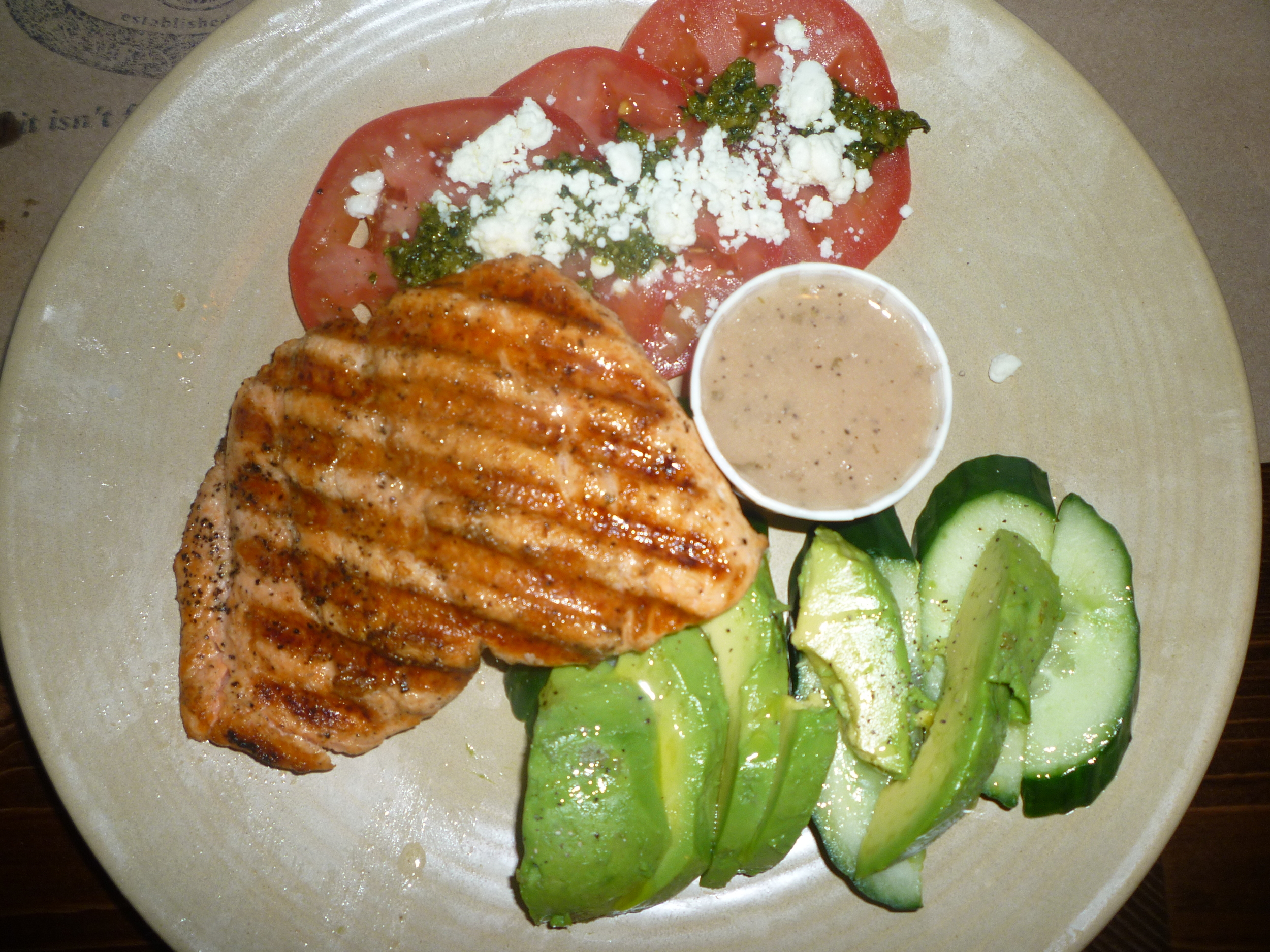
After spending 5 hours in a car with my favorite mom in the world, playing with baby dolls, and eating a really good hummus and veggie sandwhich at Atticus, I am now pre/postnatal certified! I made my way up to New Haven Hospital for the practical part of my Dancing Thru Pregnancy® certification, which I DID pass!
I have recently gained an interest in fitness for women who are pregnant and have recently given birth. After doing research and considering my background as a dancer I felt that Dancing Thru Pregnancy® (DTP) was a perfect fit!
Ann Cowlin, founder and director of Dancing Thru Pregnancy® led the practicum, which consisted of a mind/body segment, relaxation techniques,a cardio session, and strength, flexibility and special exercises. Ann was a filled with a wealth of information and had scientific studies to back up pretty much everything she said about pregnancy, labor, birth, and fitness for women.
Through studying and taking my exam I have learned a lot about the changes a woman goes through during pregnancy, both biologically and physiologically. Pretty amazing. I hope to use my new knowledge during classes and training sessions. Maybe a new dance class for pregnant women?
Laurens Questions, Ann's Answers:
1. What benefit does aerobic dancing provide for pre/postnatal individuals? Are there any studies that show this?
"The preponderance of research studies that demonstrate benefits of exercise for pre/postnatal women involve aerobic - or cardiovascular - conditioning. Aerobic dancing is one of the major methods studied. In the 1970s, researchers theorized that chronic moderate to high intensity aerobic exercise, especially running and aerobic dancing, had an adverse effect on pregnancy. What they discovered over the next few decades was quite the opposite: Women who participate in aerobics throughout pregnancy and in early postpartum tend to have reduced incidence of congenital fetal anomalies, spontaneous abortion, placental abruption, intrauterine growth restriction (IUGR), pregnancy-induced hypertension (PIH) and preeclampsia, gestational diabetes, fetal distress and fetal demise, than women who do not participate in aerobics. In addition, they have shorter active phases of labor, reduced risk for cesarean, and faster recovery as measured by elimination of free radicals produced during labor. Following birth, those who are vigorously active prior to six weeks postpartum have less weight to lose, a more joyful sense of well-being, and better scores on the Lederman Maternal Adaptation Scales than women who are sedentary. In addition, fetuses benefit from maternal cardiovascular fitness. There are long-term health benefits for women who do aerobics during pregnancy. They are also more likely to be physically fit in perimenopause than those who do not participate."
*Ann then listed over 20 references. Inquire if you would like to see them.
2. What is the most important advice you can give pregnant women who want to have a healthy baby and fast recovery?
"When a woman becomes pregnant, her health is a major factor in how her pregnancy will proceed. If she has been exposed to a virulent infection or is sedentary, it may have an impact on how well the implantation goes and increase her risk for hypertension and long-term cardiovascular disease. If she has metabolic syndrome, she is at risk for complications such as gestational diabetes and her offspring is at risk for childhood obesity.
On the other hand, if she has taken care of herself, is physically fit and well nourished, is well rested and has not been exposed to illnesses that induce dramatic changes in her immune system, she has done her best. She has created a situation in which her body is best prepared for the rigors of pregnancy, birth and motherhood.
There are still genetic and environmental factors that can affect the course of the pregnancy, but behavior is the one factor that women have control over. At Dancing Thru Pregnancy® we are fond of the notion that if you know a certain behavior is the best for a situation, it is smart to chose that behavior. If you do not, you are sabotaging yourself.”
Reference: Cowlin A. The Pregnancy Pathway, epub 2009-10. http://dancingthrupregnancy.wordpress.com.
3. What are your thoughts on epidurals?
"They have their place."
4. What started your interest in the pre/postnatal field?
"It was a “perfect storm” kind of situation. I was a professional dancer and dance educator, with an MA in Dance from UCLA, where I had studied kinesiology as part of the degree program. I had also worked at both the Harvard and UCLA medical libraries during college summers and grad school, and pretty much read everything in the libraries. I became interested in dance medicine and was doing a dance residency in Morgantown, WV in 1979. A large group of my friends there were obstetricians, midwives and perinatal nurses, many involved with the state health department’s Improved Pregnancy Outcome project. The project asked me to develop an exercise program for pregnancy as part of their mission. It seemed like an interesting challenge and I had the support of the medical school at WVU. A year and a half later, when I was hired to teach dance at Yale, the chief of Obstetrics at the medical school here and the director of the Midwifery Specialty at the nursing school both welcomed my project, gave me enormous support, and opened doors for research and development. I was incredibly fortunate in the mentors I had along the way and work to continue paying it forward. I have participated in about 300 births, in many different settings. But, most important, in the classroom, working with the women and later the babies, too, I am completely enthralled with the work."
5. Can a woman perform abdominal crunches if pregnant? If not, what is another substitute to strengthen the abdominals?
"“Abdominals” covers a lot of territory…on the surface are the speed muscles, rectus abdominus (RA), next layer down are the internal and external obliques (IO & EO) and the pyramidalis, and underneath - supporting the innards - the transverse abdominus (TrA). They all have different functions. And, those are just the anterior abdominals!
I don’t see any evidence that leads me to think that crunches are high on the “must do” list for pregnancy exercise, especially once the round ligaments begin to lengthen and the belly pops. RA - used for crunches - are speed muscles whose job it is to bring the chest and pubic bone close together quickly. Their over-development leads to disc problems in the lower back in the general exercising population by hyper flexing the lumbar spine. During pregnancy, I suppose you can do them normally for the first trimester. Once the belly pops and the linea alba begins to stretch, you are at risk for diastasis recti. You can do crunches on your side with some splinting of the abdomen with your hands, or on your hands and knees (the “cat” exercise). But, I don’t see a lot of value in doing lots and lots of them. What does it accomplish?
On the other hand, strengthening TrA is critical. This muscle protects the lumbar spine, aids in maintaining core stability and helps push the baby out!"
6. Based on your activity level when you are not pregnant, what activity level should you maintain when you are pregnant? Should there be a decrease or increase in activity?
"According to the Cochrane Library of Systematic Reviews, your ability to become more fit during pregnancy is not that different from any other time in your life. Thus, same rules apply: Start where you are and progress gradually. For those with little or no experience with regular exercise, find a well-qualified pre/postnatal fitness specialist to help you."
7. Is abdominal strength important to have during labor? If so why?
"A strong TrA is important in labor. This is the muscle that helps push out the baby."
 Whenever I go out to eat with my friends and family they understand that my food order is usually a process. Rarely do I order a dish the way it is, and often times have the chef create something not even on the menu. A chef once personally came to my table to deliver a meal and to say how he should make my dish a new menu item!